
The Organising Bureau of European School Student Unions, a EuCARE partner, shared with the EuCARE during our Annual meeting, an easy to understand summary of some results from the WP4- Schools Cohort!
When schools went online, the impact went far beyond the screen. 💻
The EuCARE project followed students in Italy, Portugal, and Mexico to understand how COVID-19 changed both their learning and well-being.
The findings show growing emotional struggles, especially among teenagers, and learning losses are more visible in maths and languages.
Students with fewer opportunities faced deeper challenges, proving that education recovery must look at both mental health and inequality, not just grades.
Tomorrow, we’ll dive deeper into what made those differences stronger.
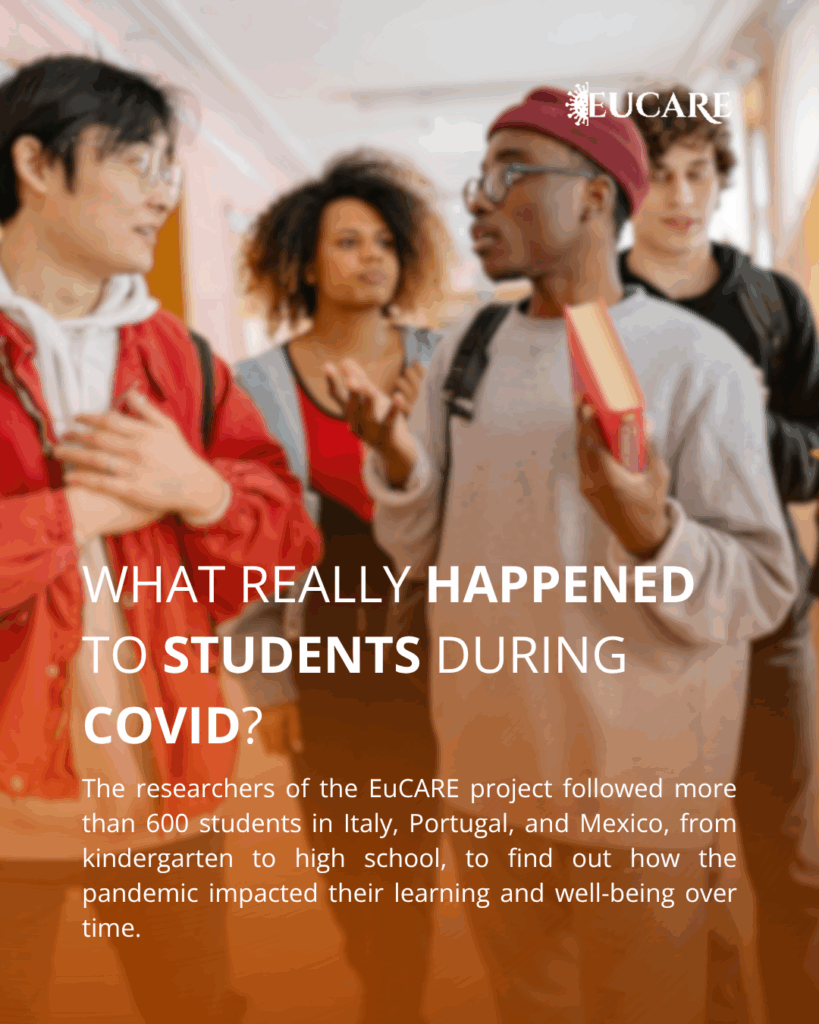
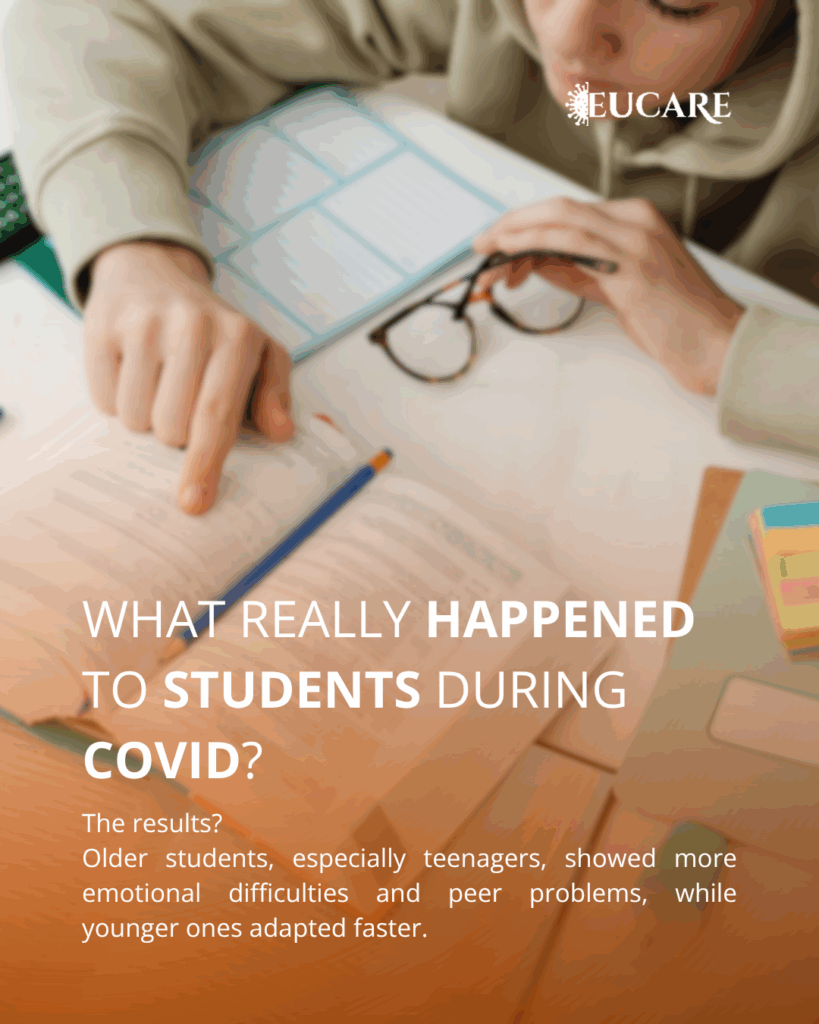
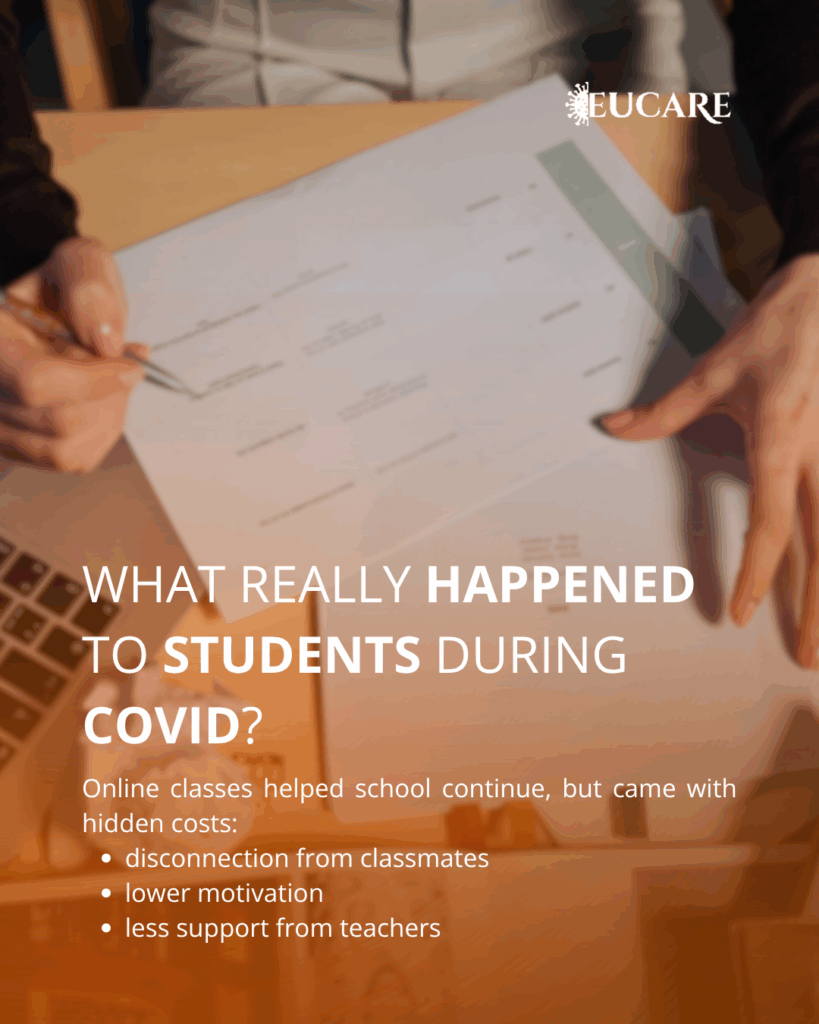
The EuCARE study looked beyond grades and found that emotions, gender, and inequality shaped how students lived through the pandemic.
Female students experienced more emotional distress and frustration with distance learning, and that emotional strain made learning even harder.
Students from families with fewer resources or lower parental education levels also faced greater learning loss.
These results show that mental health and inequality are deeply connected, and both have lasting effects on how students learn.
To rebuild education, we need more than lessons and exams.
We need systems that listen, support, and care for every student.


When schools closed to tackle the spread of COVID‑19, there was hope this would make a big difference. But what does the evidence actually say about schools and virus transmission?
The EuCARE project followed students in Italy, Germany, and Portugal to assess the links between COVID‑19 risk and school attendance.
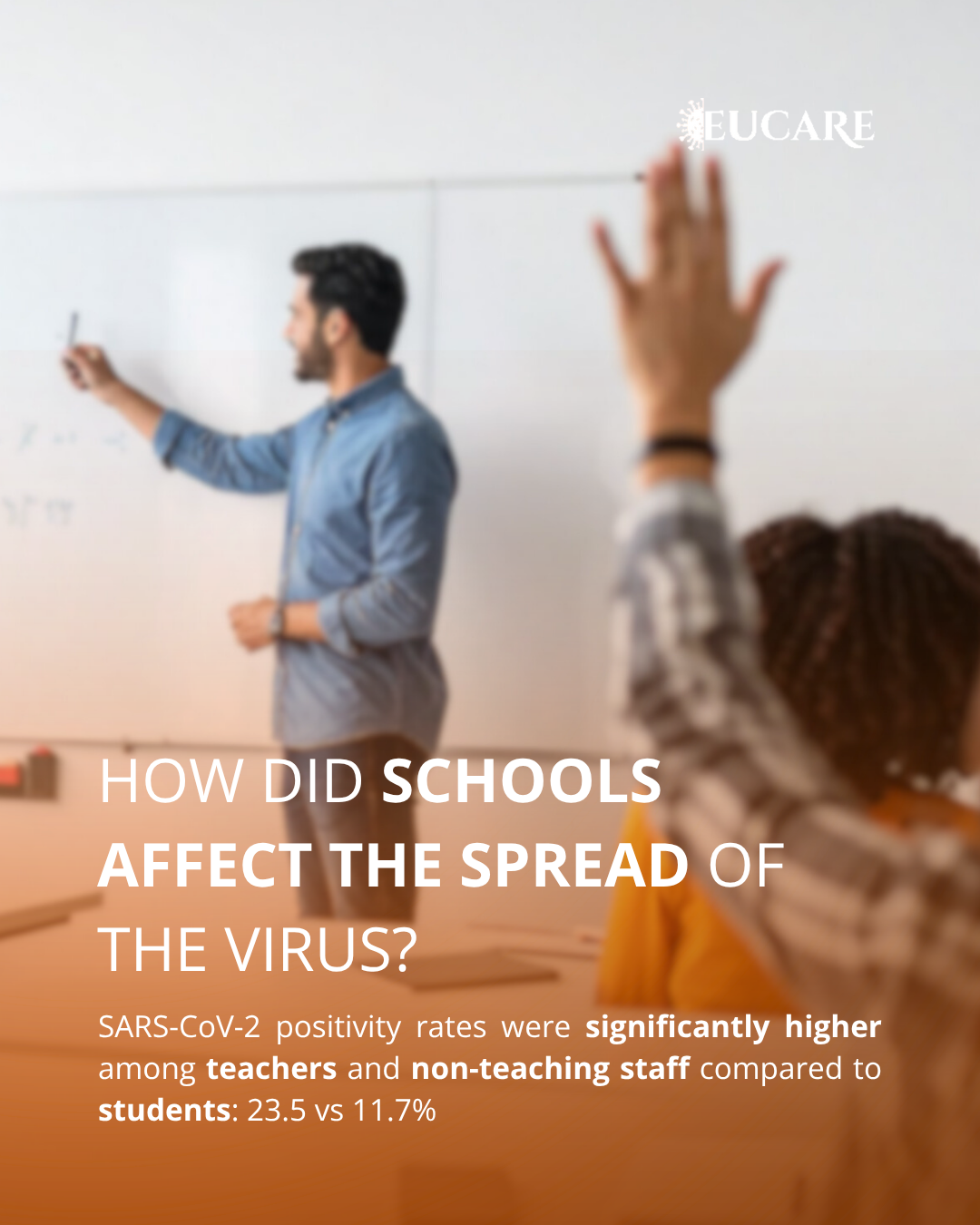
SARS-CoV-2 positivity rates were significantly higher among teachers and non-teaching staff compared to students: 23.5 vs 11.7%. Similarly, the meta-analysis found that screening methods are particularly useful to reduce clusters among teachers.
When the study examined how the virus reproduction number responded to schools opening or closing, no clear causal link was found between changes in transmission and school attendance alone, meaning schools were not drivers of community spread.
Overall, this proves that attending school did not significantly increase the spread of COVID‑19, supporting the idea that, when done safely with strong protective measures, keeping schools open is essential for supporting student life and learning.
The Organising Bureau of European School Student Unions has shared with EuCARE an easy‑to‑understand summary of these results from the WP4‑Schools Cohort.