
At EuCARE, we investigate how evolutionary changes in the virus can lead to the lack of detection of potentially serious SARS-CoV-2 outbreaks, for example due to atypical symptoms upon presentation or failure of diagnostic test.
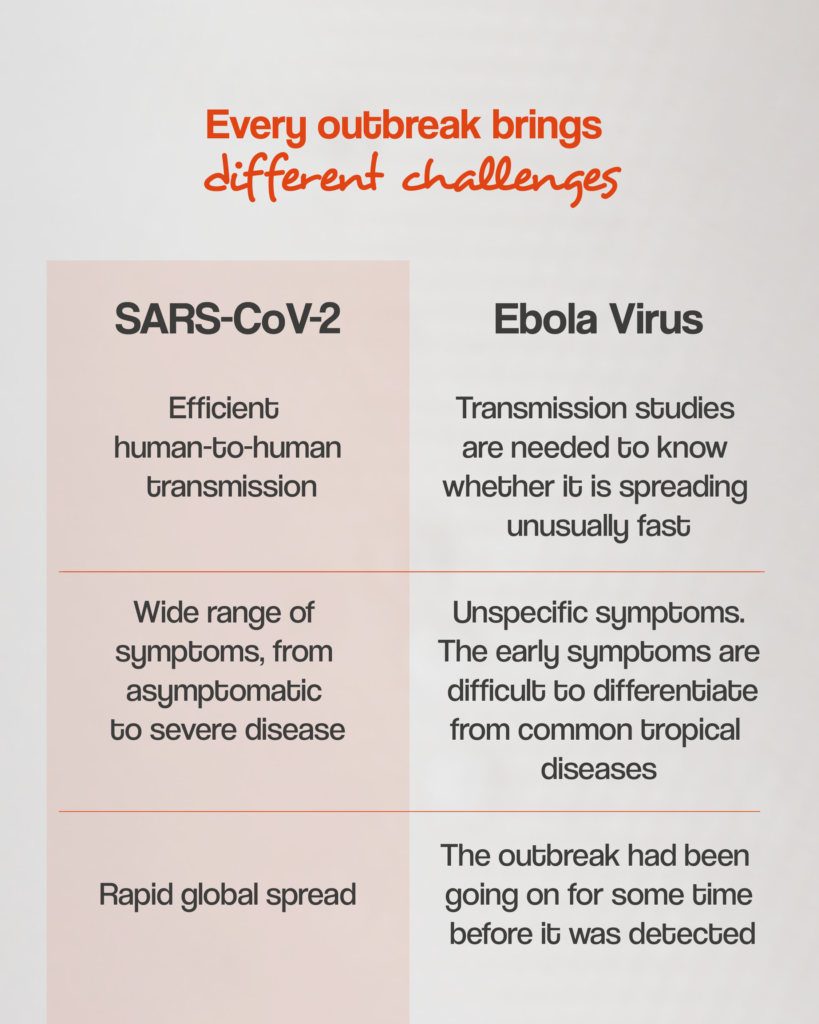
This Ebola Bundibugyo outbreak is teaching us again that, no matter how prepared we think we are, a new zoonotic jump, can makes us need to start everything all over again. As Ebola virus (O zairense) is the most common cause of Ebola virus disease, most diagnostic tests were developed based on this species and thus the most widely available PCR diagnostic platforms are not able to detect the Bundibugyo virus.
Also, the Bundibugyo virus presents with very unspecific symptoms and different from previous Ebola virus disease cases. For example, bleeding, a very specific symptom of Ebola virus disease, is many times missing in Ebola virus disease caused by Bundibugyo virus, making clinical suspiction more difficult.
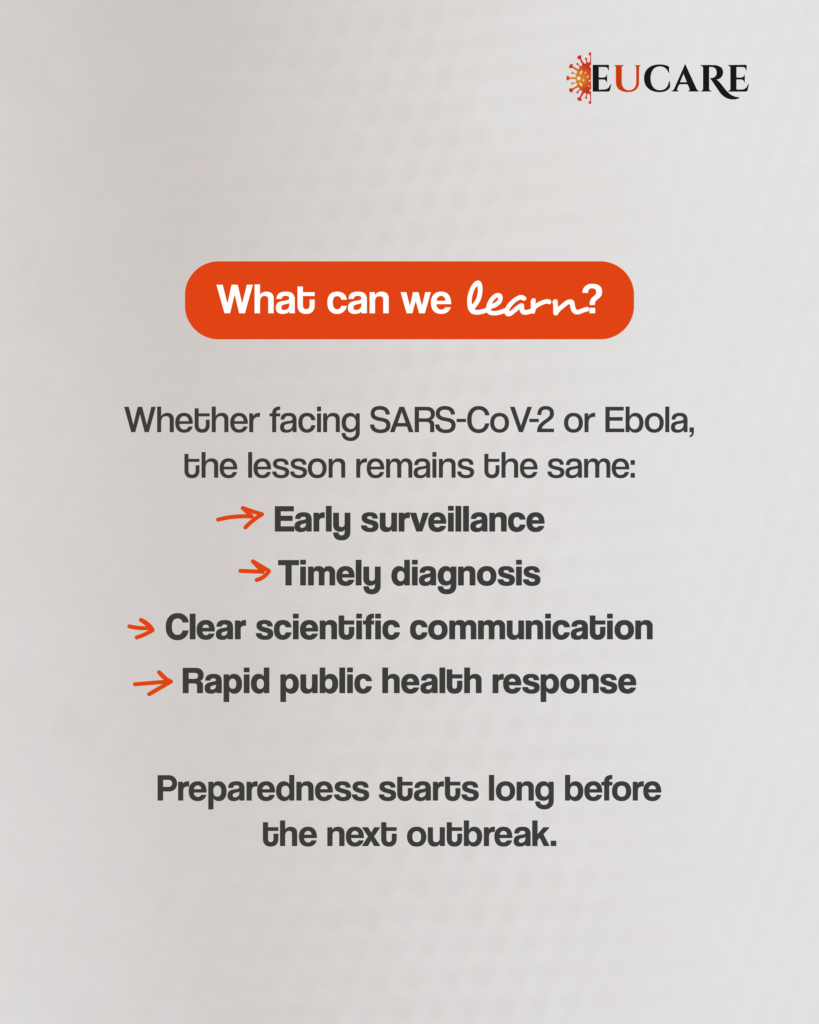
While SARS-CoV-2 and Ebola differ significantly in their patterns of transmission, clinical presentation and public health impact, both highlight the importance of developing a solid base of evidence for preparedness, early surveillance, accurate diagnosis and timely public health action.
Recent observations from the current Ebola outbreak also remind us that diseases may not always present as expected. When symptoms are less easily recognised, detecting and containing outbreaks becomes even more challenging.
At EuCARE, we believe that comparing emerging infectious diseases helps strengthen preparedness, improve surveillance and support evidence-based public health responses.
Because every lesson learned today helps us prepare for tomorrow. 🌍🔬